Economic freedom globally up but SA tumbles down

ECONOMIC FREEDOM in South Africa deteriorates rapidly. The country has tumbled 12 places and is now firmly embedded in the bottom half of the 162 countries and territories evaluated in the Economic Freedom of the World: 2018 Annual Report. This report by the Fraser Institute confirmed SA’s decline from position 82 to 94 due to anti-freedom policies and practices.

In 2003 SA almost made it into the most-free quartile ranking gaining position 45.  Now the country is a 3rd quartile fixture, being three consecutive years in the bottom half.

The Economic Freedom of the World Report  is the world’s premier measurement of economic freedom, evaluating and ranking countries in five areas: size of government, legal structure and security of property rights, access to sound money, freedom to trade internationally and regulation of credit, labour and business. (See full report).

Continue reading “Economic freedom globally up but SA tumbles down”

Government sabotages growth through property rights uncertainties and ignoring Moody’s warning shots

The heated debate between proponents of property protection and those in favour of  confiscation (expropriation without compensation) has been characterised by a lack of data and waged mainly on ideological and emotional arguments.  The lack of an acceptable factual basis is evident in:

  • Government, AgriSA and Afriforum operating with different figures for categorising land ownership according to race;
  • The number of farms on the list for the first round of expropriation.  (If there was such a list).
  • Uncertainty about the number of recipients of free subsidy houses (where transfer of title has not taken place) and how these properties should be counted.
  • Arguments that expropriation would kill the economy simply being countered with promises that the economy would not be harmed.

At the public consultations the facts applied were almost always derived from (and limited to) local situations and narratives with no or little attention to systemic information. EOSA therefore analysed last year’s WEF’s Global Competitiveness Index (as part of our enterprise research on relevant data and statistics) to assess whether there are some global indicators to inform the debate.  Several significant correlations are evident from the WEF data:

  • Highly competitive countries have strong protection of property rights.
  • High per capita GDP goes hand-in-hand with property rights.
  • Poor policing and high cost of crime for businesses are not characteristics of highly competitive countries.

Continue reading “Government sabotages growth through property rights uncertainties and ignoring Moody’s warning shots”

Turning ad hoc-decisions into “add havoc” decisions: Updated prospectus shows SA has much “emerging” to do…

If the Ramaphosa quest for pursuing economic growth and restoring full investment status for South Africa was packaged as a new venture in January it would have received substantial interest. In light of the tsunami of promises about FDI since then, it may be time to look at an updated “prospectus”.

Indicator: Economic growth is the highest priority

In his “New Deal” Ramaphosa promised to keep “an unrelenting focus on growth”. He stated: “We must be bold and determined. We should be targeting 3 percent GDP growth in 2018 rising to 5 percent growth by 2023.”

Prospectus update:

Screen Shot 2018-07-26 at 6.01.54 PM
The Messenger (25 July 2018)

Continue reading “Turning ad hoc-decisions into “add havoc” decisions: Updated prospectus shows SA has much “emerging” to do…”

Pro-poor LED fails our cities, towns & the poor: Enterprises of the right kind generate city growth

Johannes Wessels
@johannesEOSA1

There is an intriguing symbiosis between cities and towns on the one hand and enterprises on the other. As the world population urbanise, so are business activities.

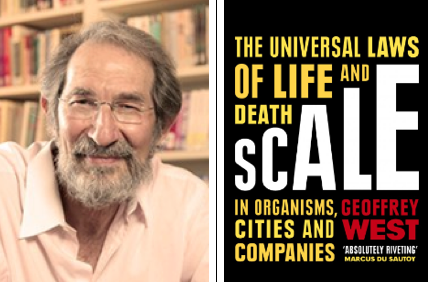
Physicist Geoffrey West in his “Scale:  The Universal Laws of Life, Growth and Death in Organisms, Cities and Companies” says based on city growth one can state precisely what will happen with the number of businesses in that city: a doubling of population does not require a doubling of grocery stores or filling stations, economies of scale kick in in a predictable manner. The reverse is also true.

Geoffrey West & Scale

Unfortunately, South Africa’s economic and enterprise development policies and strategies ignore these predictable realities. In addition, LED plans by municipalities in the main demonstrate a lack of understanding of what drives development.

Continue reading “Pro-poor LED fails our cities, towns & the poor: Enterprises of the right kind generate city growth”

The folly of creating businesses whilst tolerating a criminal-friendly environment

Johannes Wessels
@johannesEOSA1

The South African enterprise world remains in critical condition despite numerous initiatives to cultivate entrepreneurship and new businesses since the real causes undermining its well-being are not addressed.  One of the fundamental causes for a struggling enterprise world is the fact that SA is more criminal-friendly than enterprise friendly.

Mooi River LEGO

We’ve seen that:

Comfortable in this paradigm, Government embarked on an interventionist road to transform the economy in accordance with its perceived reality. It launched a range of black enterprise incubation programs with massive grants, prescriptive procurement strategies, BEE, industry charters, interference with IP and a commitment to even expropriate without compensation.

Continue reading “The folly of creating businesses whilst tolerating a criminal-friendly environment”

Are our enterprise policies shaped by obsessions? Paradigm paralysis (2)

Ramaphosa’s Manifesto – “A New Deal” – envisages the “massifying” of black enterprises to promote growth and job creation. It is shaped – like the National Development Plan – by the paradigm of SMEs as prime agents for growth and jobs. As the belief in the curative effects of bloodletting – it was the general consensus – acted as a barrier that prevented the consideration of alternative treatments, the belief in SMEs obscures evidence that net job creation is largely independent of firm size.

Convictions, one must remember, do not necessarily yield to evidence.

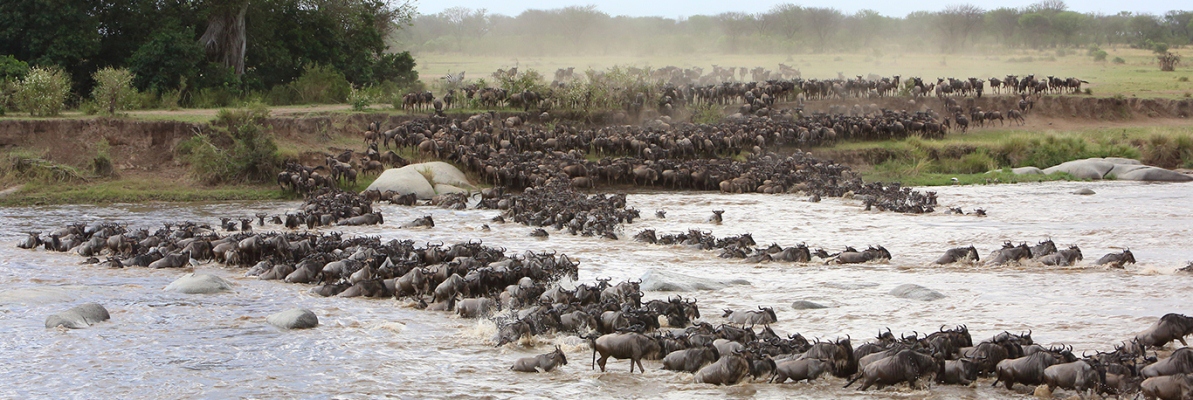
Masaai Mara crossing

For the creation of several hundred thousand successful businesses (or would “massifying” – Ramaphosa’s term – imply businesses by the million?) there needs to be at least a similar number of entrepreneurs with effective business skills and plans for these businesses to have a chance of survival.

But for a business to succeed one needs other ingredients than mere entrepreneurial aptitude and astute management: it requires support from customers and clients. Successful “massifying” of new businesses would therefore depend on a prior (or at least simultaneous) mushrooming of the spending power of existing consumers and/or the “massifying” of consumers.

On that, the New Deal is silent… Could a 2016 warning about economic transformation hold the explanation?

Continue reading “Are our enterprise policies shaped by obsessions? Paradigm paralysis (2)”